Water Flows where Boreline goes I first started working in the groundwater industry in 1990…
Calculating Your Pumping Cost
Your submersible pumps were most probably installed on 20ft sticks of galvanized steel pipe. These pipes have been in the ground for many years and your production rate has dropped to about 75% or 80% of the original production. You are concerned about the further loss of production and are wondering what you should do.
Call a Contractor?
You have two options; 1) call a contractor to pull your pump or 2) just continue until your pump stops producing. What do you do?
If you call a contractor, you will need to let them know the size of your pump, the diameter of the drop pipe and the depth setting the pump is set at. With this information, the contractor will decide what equipment he needs and will calculate a price based on mobilizing and pulling the pump out of the well. He will also have to checked his calendar and find a time to schedule the project.
Once you receive the quote, you now have an idea of what this pump replacement will cost. There are also hidden costs that are impossible to calculate and these are based on the condition of the pipe.
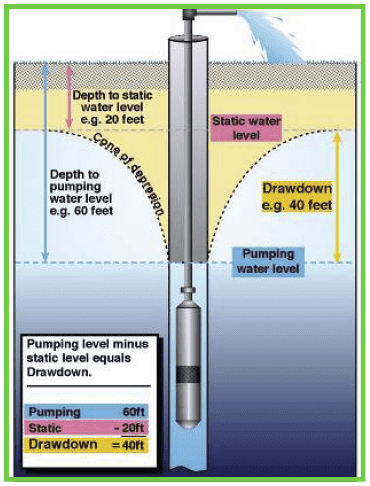
Static Water Level, Pumping Level, Drawdown
Generally, drop pipe set below Static Water Level corrodes quicker because it is submerged in water and subject to corrosion from the inside and the outside. But as a general rule, you should budget that you will need to replace at least 20% to 25% of the number of lengths your pump is installed on.
Another cost worth budgeting for is replacing the power cable in its entirety. Even though you may find that the power cable is not really compromised, most contractors will convince you to replace this and wisely so. The reason is that the cost of pulling 20ft sticks of pipe and the time involved does not warrant putting a second-hand power cable back down the same well. This is because the cost of pulling and setting a pump is more than the cost of replacing the power cable. So it seems obvious that while this is all out of the well, you may as well replace this.
When you later put all these costs down on paper, you quickly realize this little exercise in calculating the cost of getting production back from 75% to 100% is a lot more than you ever expected.
Then you would still have to convince the financial wizards about this and we all know that this becomes pretty much an impossible task. No one has these funds available for this kind of thing and you think twice about what to do now.
So like most of us, you decide to let sleeping dogs lie .… don’t rock the boat .… out of sight, out of mind …. you get the message. We are pretty much forced to just continue pumping.
But the question should now be, how much is this actual inefficiency costing you?
What is the actual cost?
We don’t have anything to compare the contractors cost to and that is a problem because calculating the actual cost of this lost production is a lot easier to do than you think.
Just look at your electricity bill and find the cents per kWh you are being charged.
The average cost for Commercial Electricity across the USA is currently about 14c / kWh with rates varying from about 40c / kWH in Hawaii to 10c / kWh in North Dakota. For our calculation below, let’s assume our cost is 25c / kWh.
Submersible pumps and motors are usually rated in horsepower (hp) and 10hp is equivalent to about 7.5kw.
So your 30hp motor = 23kw x 25c / kWh = $5.75 / hr. This is what you are paying, per hour, to run your 30hp pump and motor.
Now think back to when you first installed your new submersible pump and motor on that new galvanized drop pipe. You may have started-off running your pump for about 10 to 12 hours per day, depending on your requirements.
Over time we lose production for a number of reasons:
- a) Over-Pumping of the aquifer = a lower Pumping Level
- b) Scaling around the well screen = a lower Pumping Level
- c) Aging impellers and/or pump = an Inefficient Pump
- d) Corrosion at the pipe joints = an Inefficient Drop Pipe
- e) Internal scaling inside the drop pipe = an Inefficient Drop Pipe
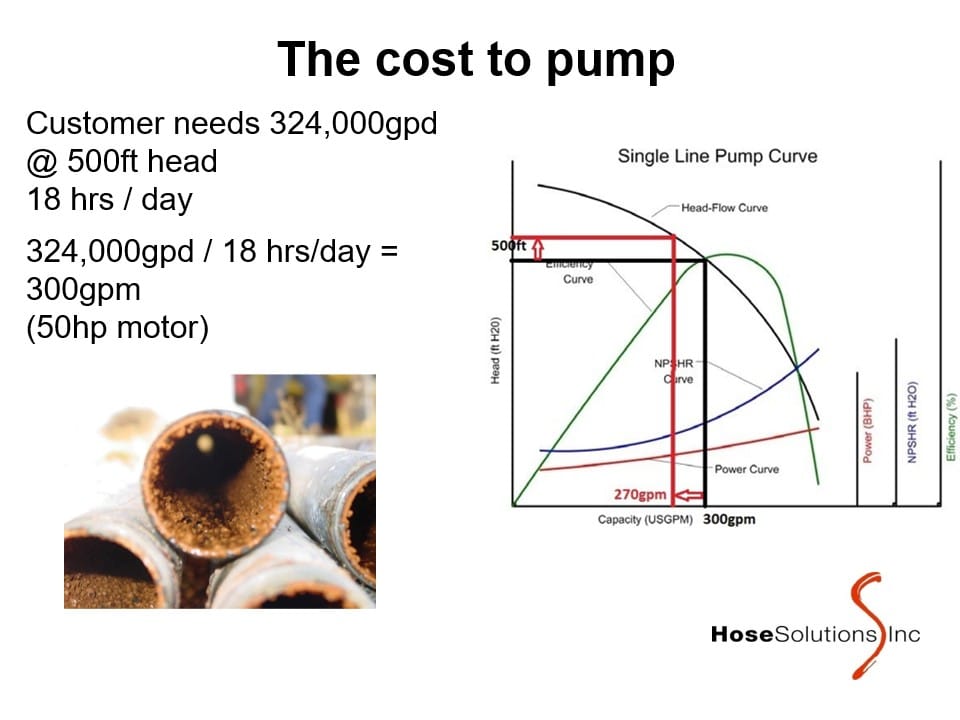
Inefficiencies increase pumping costs
We have little control when it comes to Over-Pumping the aquifer because that is based on other people all pumping from the same aquifer or it can come from a drought period where little water recharged the same aquifer.
If we are now pumping at 80% of the initial production rate, the easiest way to make up the lost production is to pump for 25% more time. This means that rather than pump 12 hrs per day, we now have to pump 15 hrs per day. And this is very easy to do because we don’t have to pull the pump but rather just run it for more time.
So what does this extra 3hrs of inefficiency cost?
3 hrs x $5.75 /hr = $17.25 / day, no big deal. This might not sound like a lot but when you think that this is what you are doing every day, for 30hp, for 365 days per year, you will quickly realize that this inefficiency is costing you $6,300 per year … and you most probably did not even realize it.
Yes, running a 30hp pump for 3 hours a day will cost you about $6,300 per year.
With this information at hand, you can now revisit your contractors quote and decide if you want to pull the pump, clean the well and re-install your pump on Boreline FlexiRiser.
Why Boreline FlexiRiser is the answer
Boreline FlexiRiser is a high-performance, layflat type hose, specifically designed to replace the rigid pipes used with submersible pumps. Advantages are numerous including:
- Total corrosion resistance – Boreline FlexiRiser is madew with high-tenacity, polyester fibers, similar to the ones used with heavy duty straps and tow ropes. These fibers are circular woven and then etruded through-the-weave with abrasion, resistant polyurethane. A pair of end fittings used on either end of the length are available in Stainless Steel. All these materials are corrosion resistant making Boreline FlexiRiser a one-time buy
- Available in one continuous length – Boreline FlexiRiser is available in one continuous length, from the pump at the bottom of the well to the elbow and base plate at the surface. The beauty of this is that there are no joints, no threads, no flanges. All just Boreline from top to bottom. When it comes to installing or retrieving a pump, you just pull on the one end and roll the entire length out of the well. The fact that Boreline makes pulling and setting pumps so easy, is the number one reason mines install their pumps on this system. No more heavy weights and difficult site conditions
- Over time you do not lose production when pumps are set on Boreline FlexiRiser. When you experience loss of production, this is mainly due to internal scaling and build-up inside the steel pipe, or corrosion at the joints. With Boreline you have no joints and because it is flexible, no internal scaling occurs resulting in no loss of production over time.
These are big reasons to consider when installing your pumps and choosing a drop pipe.
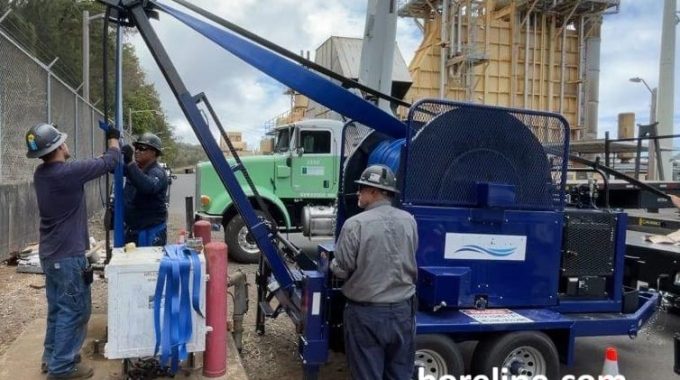
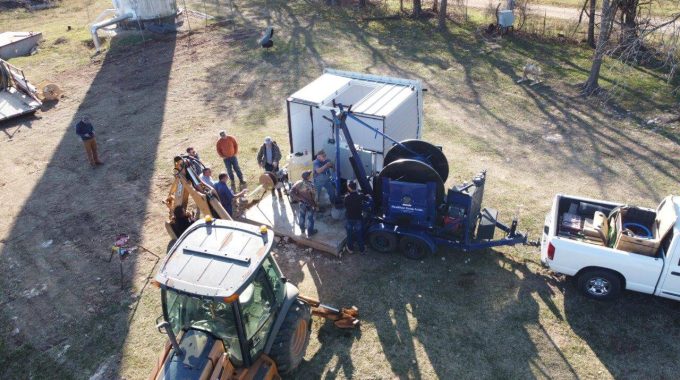
And to work even safer, quicker and more efficiently, we have our FlexiRiser Pump Puller that is designed to pull and set submersible pumps at the push of a button …. in hours instead of days. No more salaries, sick days, overtime or workers insurance. The FlexiRiser Pump Puller is ready to operate 24/7/365 !! Click here to see this unit in action at a mine in Canada. FlexiRiser Pump Puller
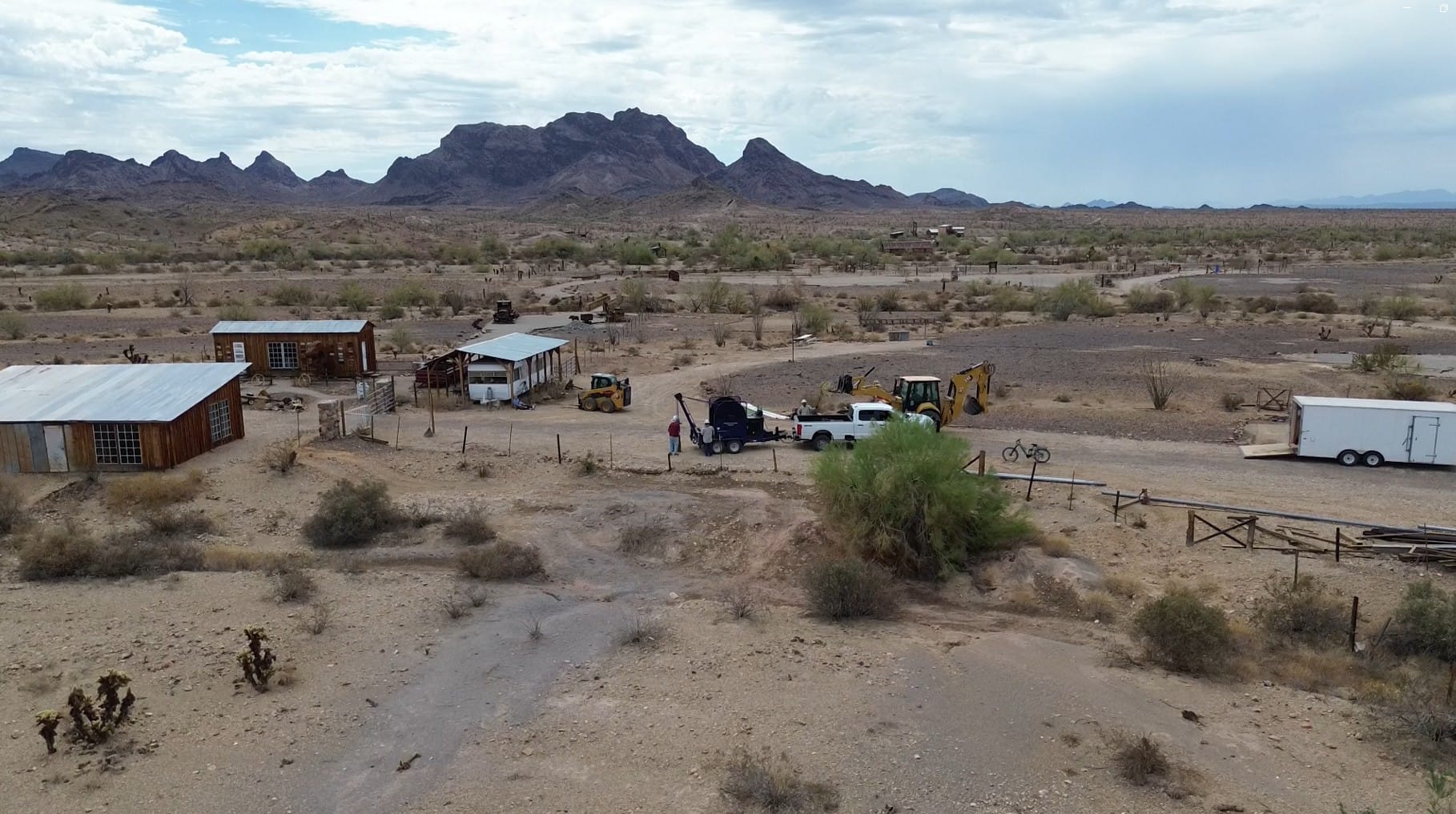 The FlexIRiser Pump Puller – easy to deploy and retrieve and a small footprint around the well
You will surely have questions about how exactly Boreline can perform so well over time and we understand that. So if you have any questions, please feel free to check out our website at www.Boreline.com and go to YouTube and search “Boreline FlexiRiser”. You will very quickly realize how many successful projects there are where people realize that Boreline is the best FlexiRiser and the best solution for long-term, successful, efficient and hassle-free pumping.
And if you have smaller remote wells, we have just the product for you. Check out our WellHose EASY Drop Pipe. You can install your own submersible pumps.
We look forward to hearing from you.
+1 480 607 1507
Related Posts