When I once visited a mine, I was asked “What is the value of someone’s…
Well Maintenance and the role of Boreline FlexiRiser
In almost all groundwater magazines currently coming across our desks, we can guarantee there will be some mention or case study talking about the Importance of Well Maintenance and Well Efficiency.
We all know the Benefits of Well Maintenance so this will not be mentioned below; all we are going to do is show you know how easy it is to do this. We know that pulling pumps set on rigid, steel pipe is a hassle, time consuming, unsafe and costly and this is the reason we do not do this.
Continue reading and you will see how this has been simplified. Well Maintenance is not such a big deal anymore as it is a lot more affordable, quick and easy so please read about this and spread the news.
“My daddy’s daddy did it this way”
Over the last century there have been big improvements in Well Drilling as wells have become bigger and deeper. Drilling techniques have expanded from mechanical percussion systems to rotary drilling, if the ground conditions permit.
Filter Packs have changed with improvements focusing on more consistent materials and glass beads that allow more groundwater to flow into the well in a more efficient manner.
Well screens have also improved, allowing for better well rehabilitation and improved water flow. We have even seen improvements in Well Casing resulting in faster installation speeds and longer life.
Submersible Pump manufacturers have also made massive gains in performance and reliability, resulting in a big move from vertical turbines to submersible pumps across all industries including water utilities, mines, agriculture and environmental.
Submersible Motors are running more efficiently and for longer periods of time without the need for regular maintenance. We have even seen improvements in Power Cable with improved insulation resulting in further, long-term efficiency improvements.
That leaves us with one glaring omission…. the actual Drop Pipe
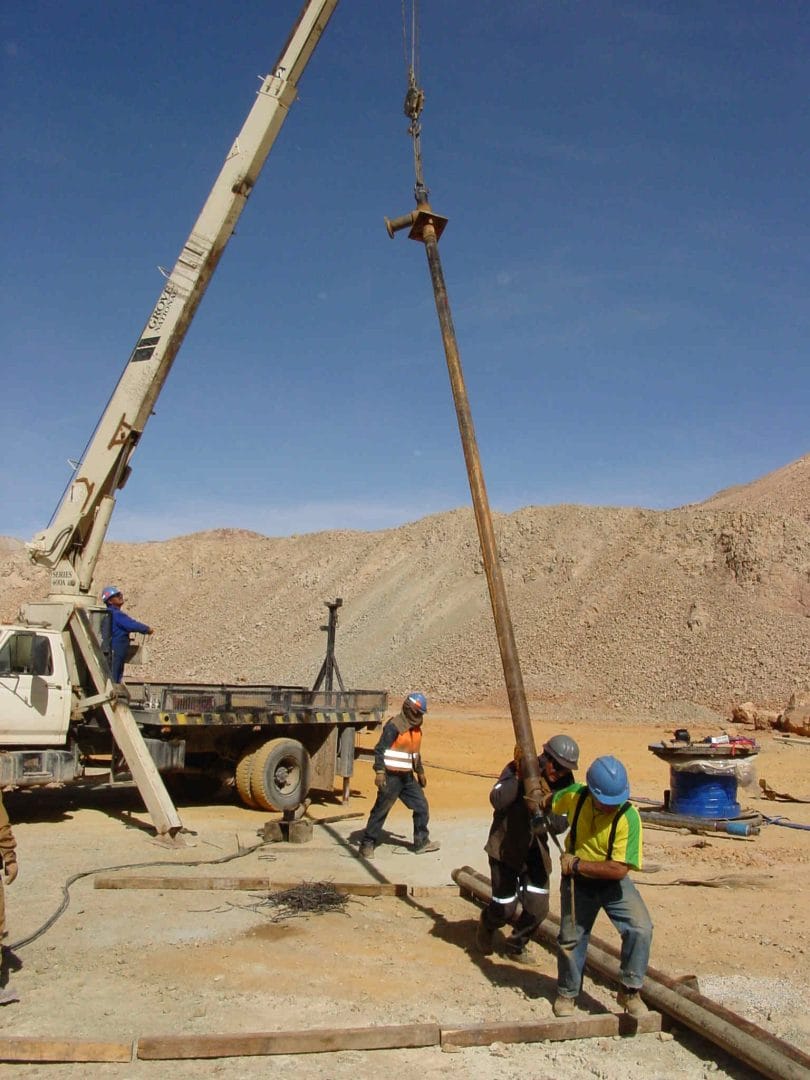
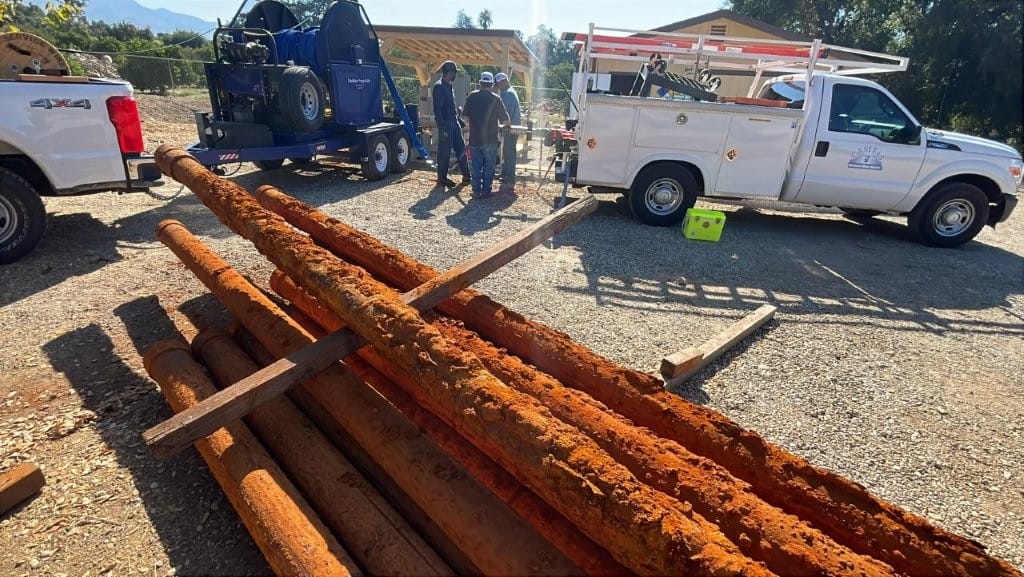
Over the decades there have been some improvements in corrosion-resistant materials and quick connect fittings but fundamentally, we are still talking about installing pumps on 20ft sticks of rigid pipe.
Hasta la vista, baby – From now on its Boreline FlexiRiser
We have all experienced the installation and retrieval of submersible pumps on these rigid pipes yet we keep on doing this the same old way, day in, day out. During bad weather, we are out there changing out pumps in dangerous situations, rushing to complete this back-breaking work before night sets in.
What options do we have?
Those of you who have been paying attention over the last few decades will have realized that there is a product, Boreline FlexiRiser, that solves these problems. Gone are the days of having to struggle around the well with pipe wrenches, cheater-bars and water splashing all over the place.
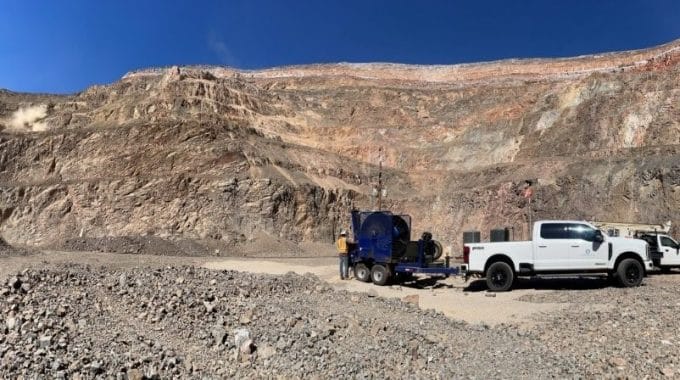
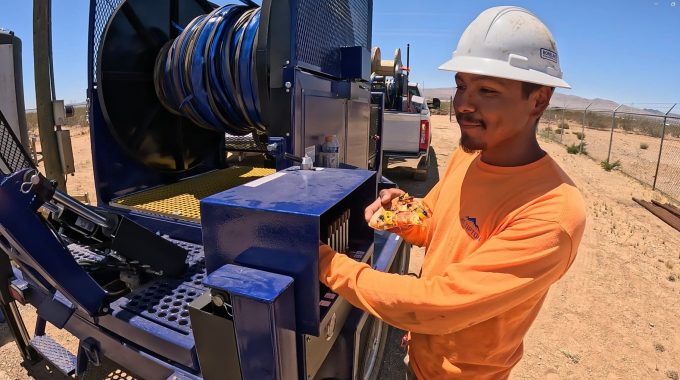
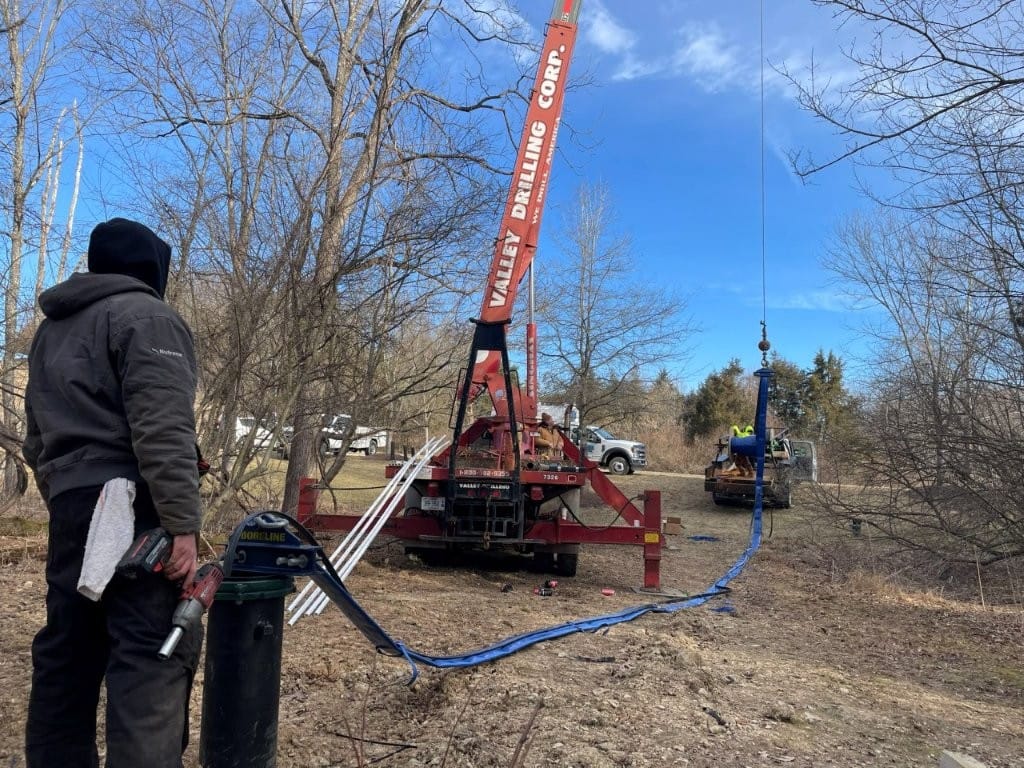
This is because Boreline FlexiRiser is supplied in one, continuous length and it supports the pump and motor in the well without the need of support ropes or cables.
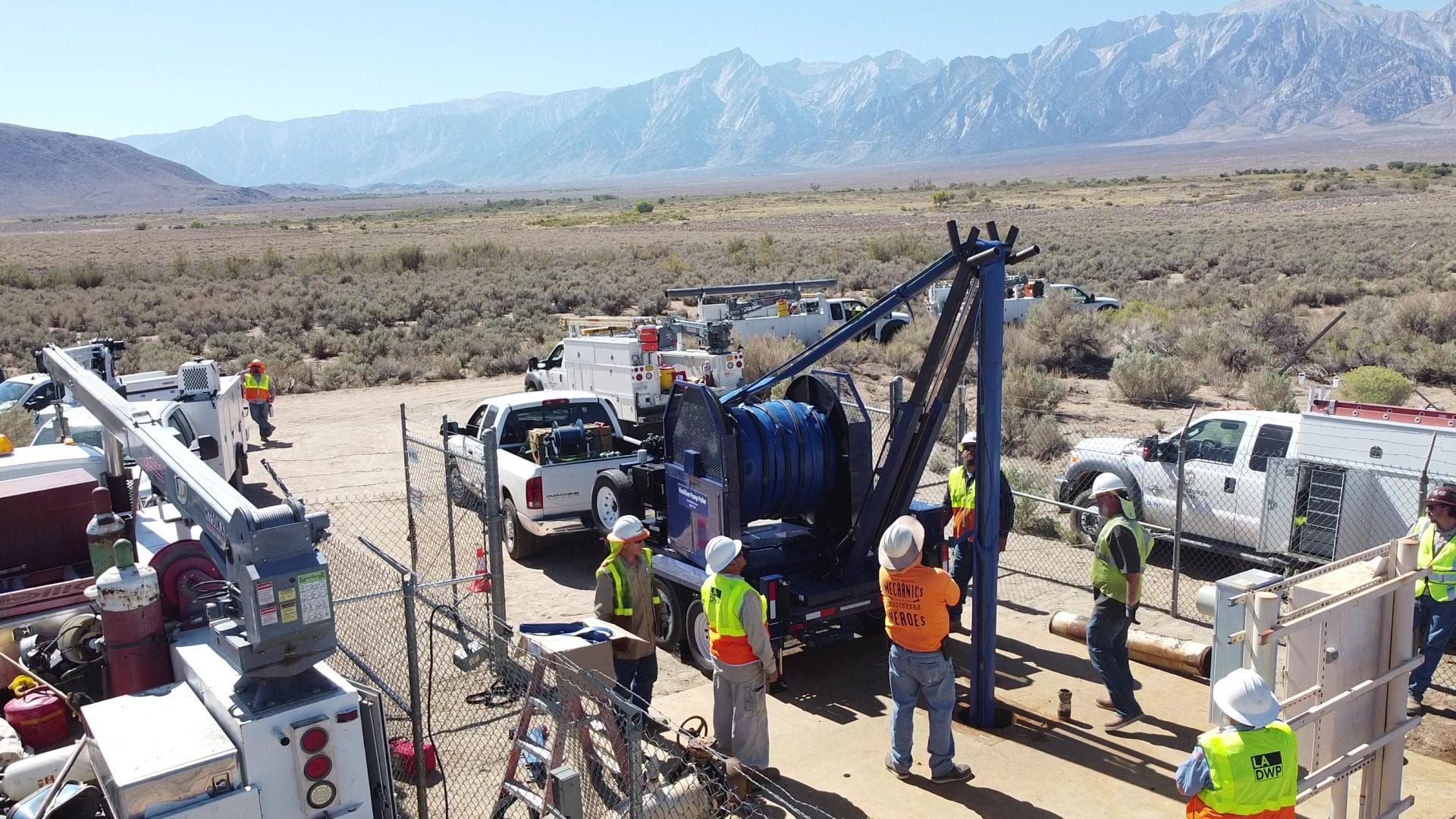
Installing Boreline FlexiRiser using Lifting Clamps
The result is a much safer and quicker installation and retrieval process as the contractor operates in a much more efficient manner. There is no need to break pipe every 20ft as the Boreline just rolls into the well, non-stop until the pump is in position.
This improvement in efficiency relates not only to the installation and removal process, or the safety of your team, or the speed with which you can pull and set pumps, or the savings realized by having to employ fewer people to do the same job. It also relates to the direct benefits to your customer.
These customer benefits include shorter down-time, smaller footprint around a well, simple and quick pump removal, happier staff and a more Efficient Pumping System. Boreline FlexiRiser is also totally non-corrosive and has a 50 Year Warranty.
Another major benefit when installing pumps on Boreline is that removing and installing pumps is not such a big deal. With the right tools, you can pull a pump set down 600ft, in less than one hour. This means that Preventative Maintenance is now a reality because pulling and setting pumps is just a Minor Inconvenience.
So what is this Boreline FlexiRiser and how does it work?
Boreline FlexiRiser is a high-performance hose that has been used around the world since 1990; it is designed to support a submersible pump in a water well. Boreline is used by water utilities, mines, industry, agriculture, environmental and domestic applications.
The entire column including pump, pipe, power cable and water hangs on the Boreline. There is one fitting that screws into the check-valve of the pump and one fitting that screws into the elbow at the surface. That is it. One, continuous length with no joints, welds or connections, from top to bottom.
Once you work with Boreline FlexiRiser you will realize why Engineers, Contractors, End Users, Mines, Water Utilities and anyone who has worked with this product does not want to go back to rigid pipe. That is because Boreline FlexiRiser is safer, easier and more efficient to work with.
The first thing to usually fail in a water well is the pump and then the drop pipe. When this happens, less water comes out at the top. Most operators will just accept this loss of production, adopting a “pump-to-fail” policy even when they have lost 20% or 30% of their production. This does not make sense but when you think about pulling the pump to fix the problem, this seems like a nightmare. So on we go, pumping and pumping until the pump stops.
This “pump-to-fail” approach would be okay if you knew the cost of running an inefficient pump system. But most of us don’t know this and we know how difficult, time-consuming and costly it is to pull that pump.
At Hose Solutions we have come to the conclusion that once your pump loses 10% of its original production it pays you to pull it out and get it back to 100%, or as close to that as you can achieve. And just think about this, if you knew how much you could save by running an efficient water well, you would very quickly realise that you need to get your pump out of the well and your well back to full production.
Just a quick calculation: If you have a 50hp pump and if your power consumption is 12 hours per day, assuming a cost of electricity of 20c/kwh, that means 10% extra pumping will cost you $3,400 per year. And this is after only a 10% loss of production. The drop in production accelerates once you have buildup so in a short period of time you will be up at 20% and 30% loss of production and this will be costing you $7,000 to $10,000 per year in increased expenses to make up this shortfall in production.
Keeping it simple, safe and efficient
If at this point you are still thinking about this, please give us a call and we can go over this with you. We like working with contractors but most of them will not be breaking this news to you because an efficient pump system with no corrosion or internal scaling does not put any dollars in their pockets. You need to be the driving force for change, and we can help you with that.
Here are some references . We have more to share with you.
City of Westport – “Moving to Boreline has allowed us to spend money on a much needed asset. Thank you Boreline for the new truck !!!”
Village of Columbus – “I would recommend Boreline to anyone with highly corrosive water. Believe me, you will save thousands of dollars every year”
Coastside Water – “With your product performing so well, I don’t believe we will be needing your help for a while”
boreline.com
480 607 1507
Sales@HoseSolutions.com
Related Posts